Case studies FIS × Anthropic
Content foundations for a design system, built for humans and agents
Creating the content foundations and processes behind the Unify Design System at a global FinTech, so product designers ship human-first experiences while AI and agentic workflows use the same guidance.
Context
Content for design systems and agentic workflows. FIS's design department supports product designers across a global financial-technology organization. Through a partnership with Anthropic, the team also builds white-label and bespoke services for other financial institutions, so the design system's guidance has two audiences: the people designing products and the AI tools helping them.
Content guidance was scattered or missing, which meant every team solved the same writing problems differently, and an AI assistant had nothing reliable to draw on.
The work
-
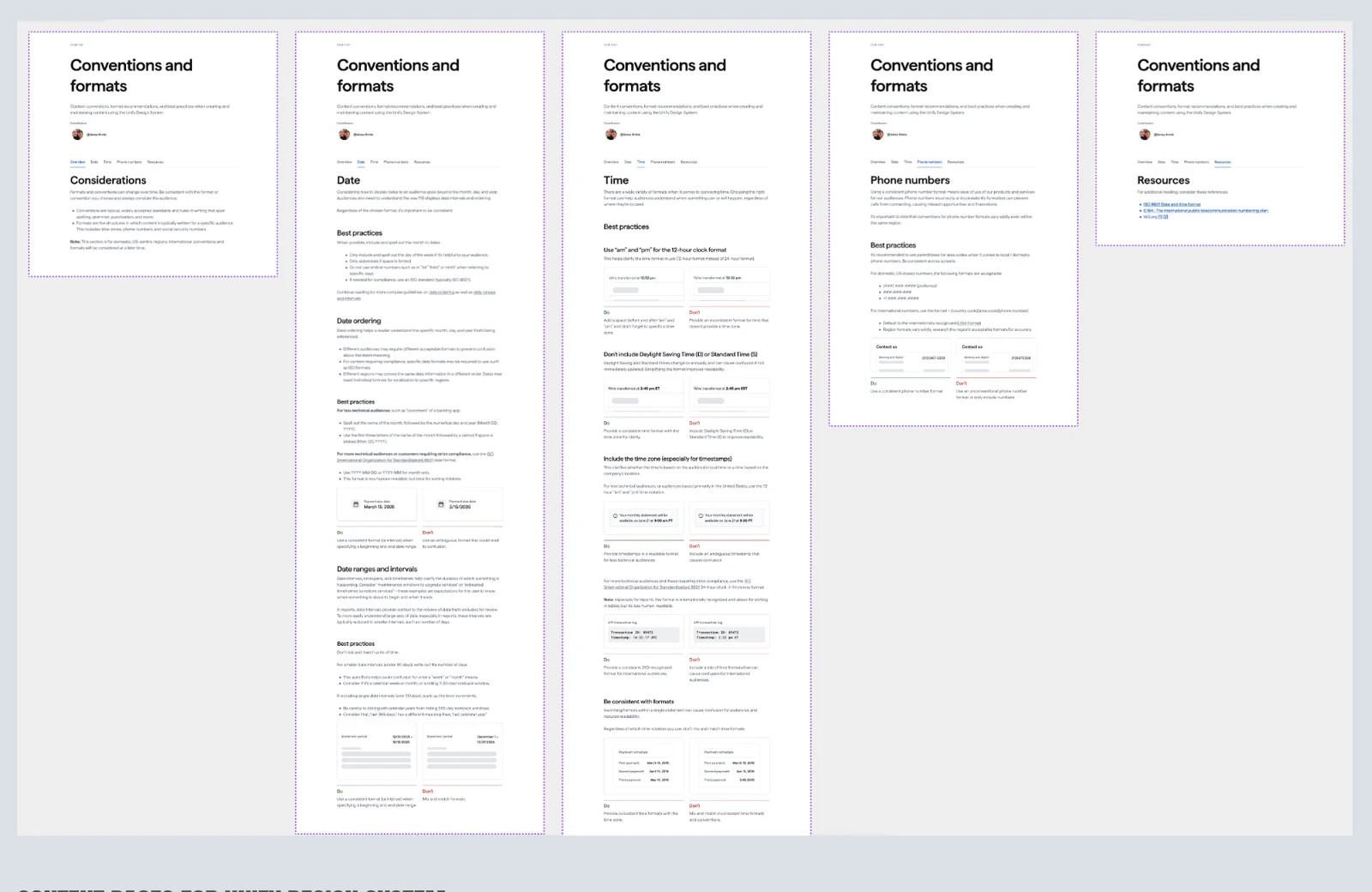
Content pages for the Unify Design System
Based on departmental and cross-functional interviews, surveys, and content audits, I authored and published documentation that meets the organization where it is: conventions and formats for dates, times, intervals, phone numbers, and more, each with best practices. (Shown at the top of this page.)
-
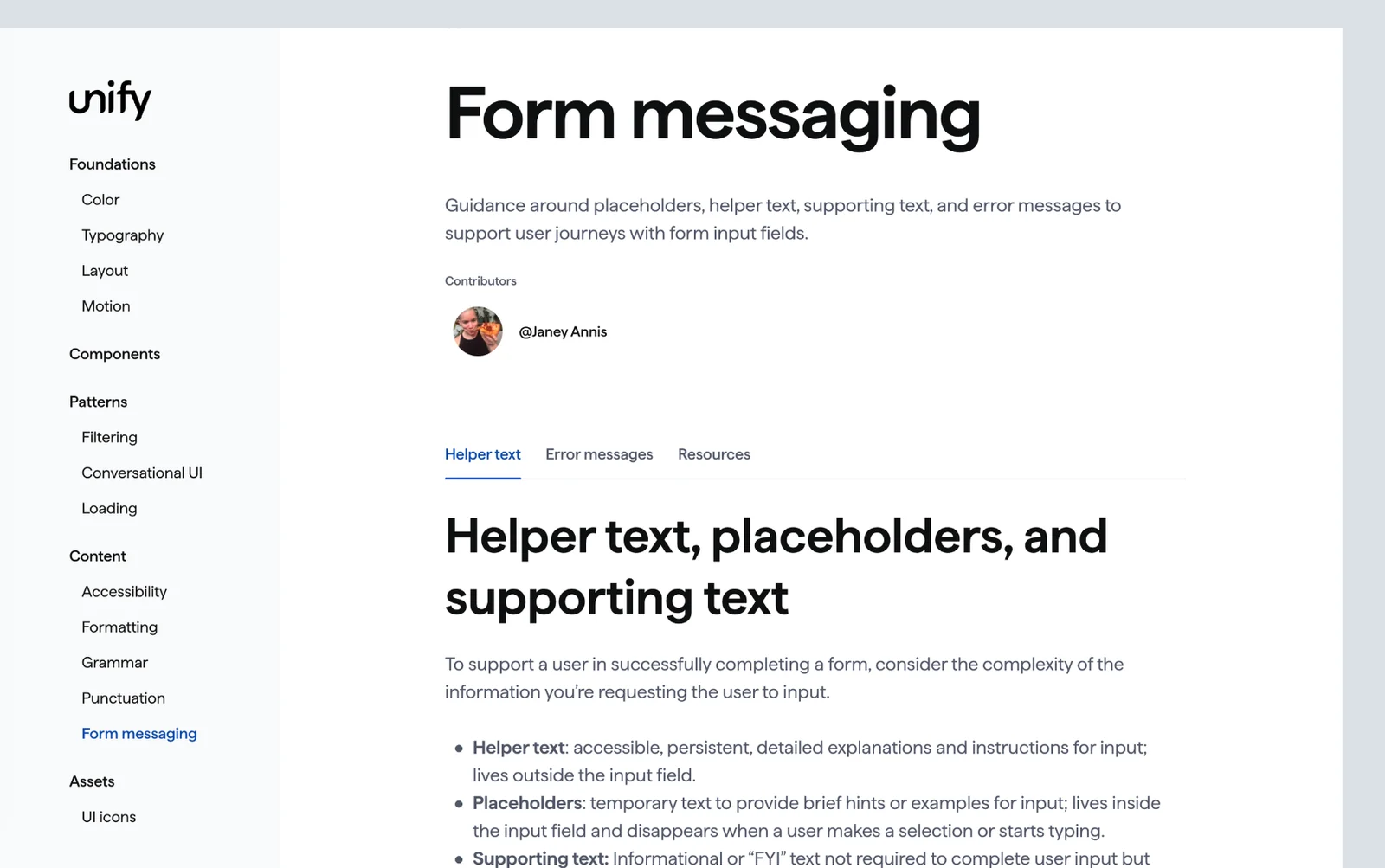
Focused, component-level guidance
Docsite pages go deep on the moments that matter most in financial products, such as form UX. The form messaging page separates helper text, placeholders, and supporting text, then covers error messages, so designers know which one a field needs and what goes in it.
-
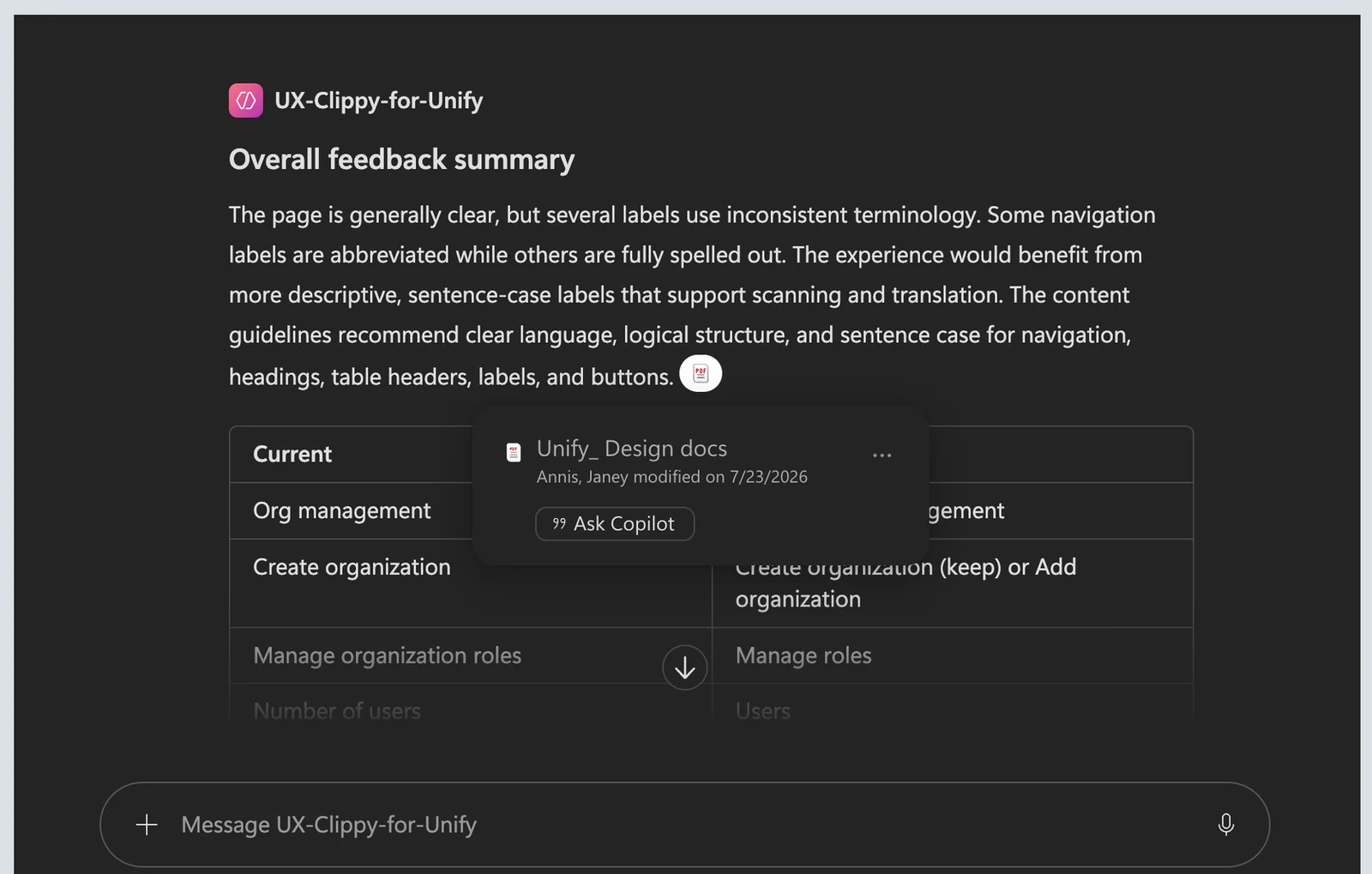
A Copilot agent for UX writing review
I built UX-Clippy, a chat agent that reviews UX copy and suggests improvements. It follows specific output instructions and treats the Unify docsite as its knowledge base, so the guidance and the tool stay in sync. Here it flags navigation labels that mix abbreviations with spelled-out terms and suggests sentence-case replacements.
-
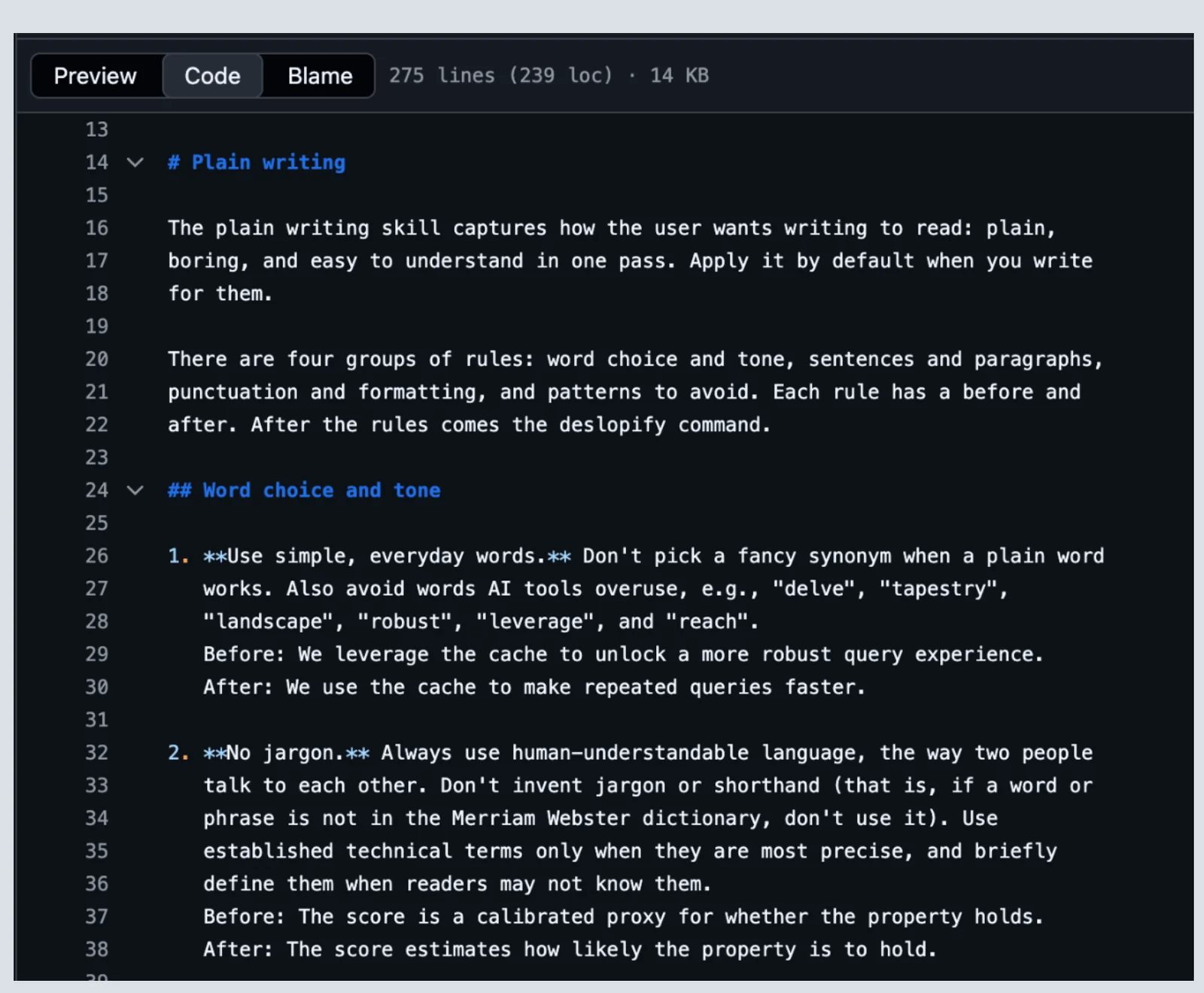
Creating and testing skills
I use Claude, Copilot, Figma MCP, and Storybook to prototype AI-powered experiences, including first-draft content reviews that designers can run before a human review. A plain writing skill, for example, captures how writing should read (plain, boring, and easy to understand in one pass) as four groups of rules, each with a before and after.